Invisible Strings
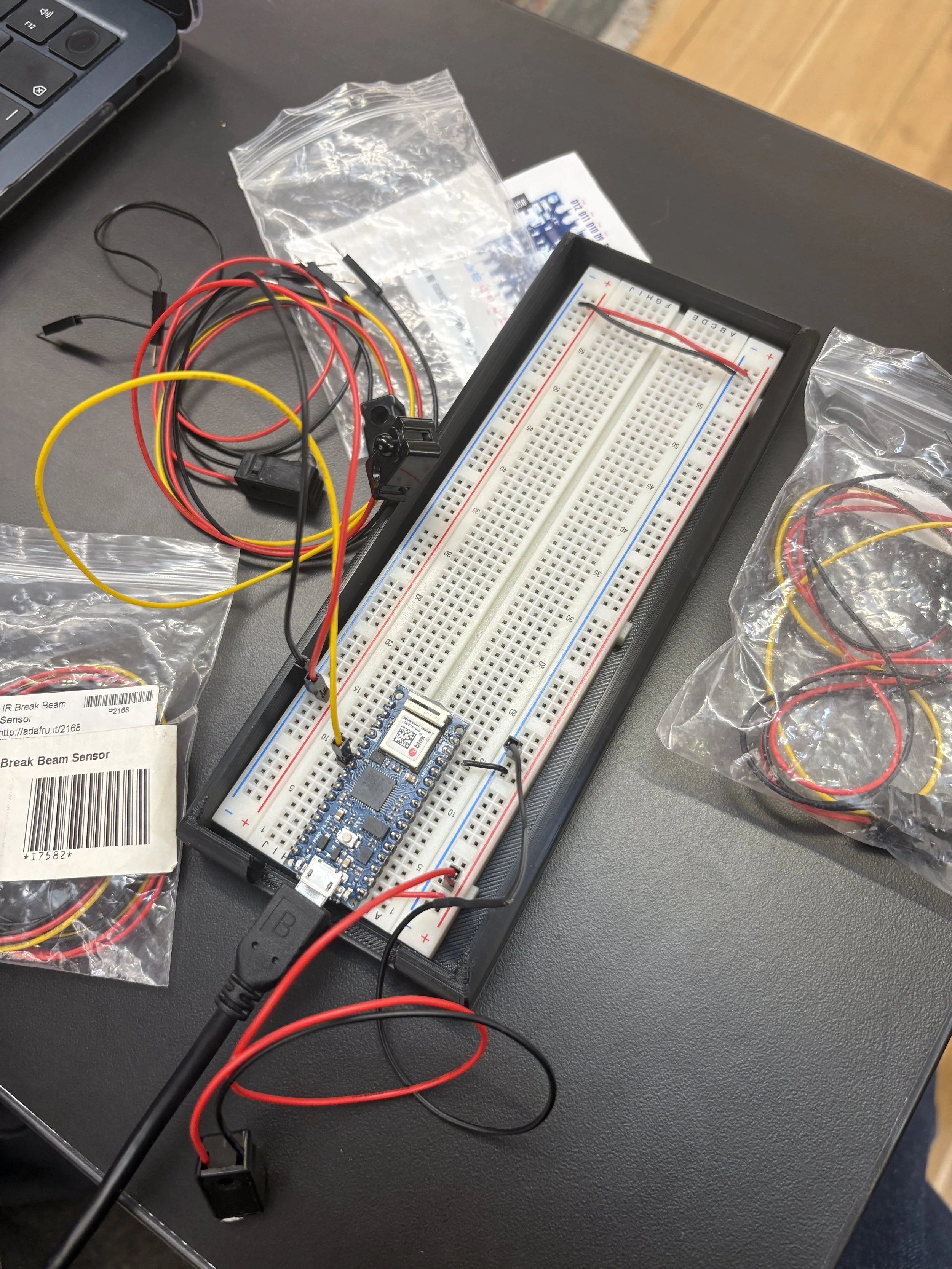
We first tested the breakbeam sensor to understand how it works and to make sure it was functioning properly. We initially used an Arduino Uno, but later translated the setup to a smaller Arduino. After confirming that both the code and wiring worked correctly, we expanded the idea and added three more sensors to represent guitar strings.
Process
🔧 Process 1: Sensor Testing & Setup
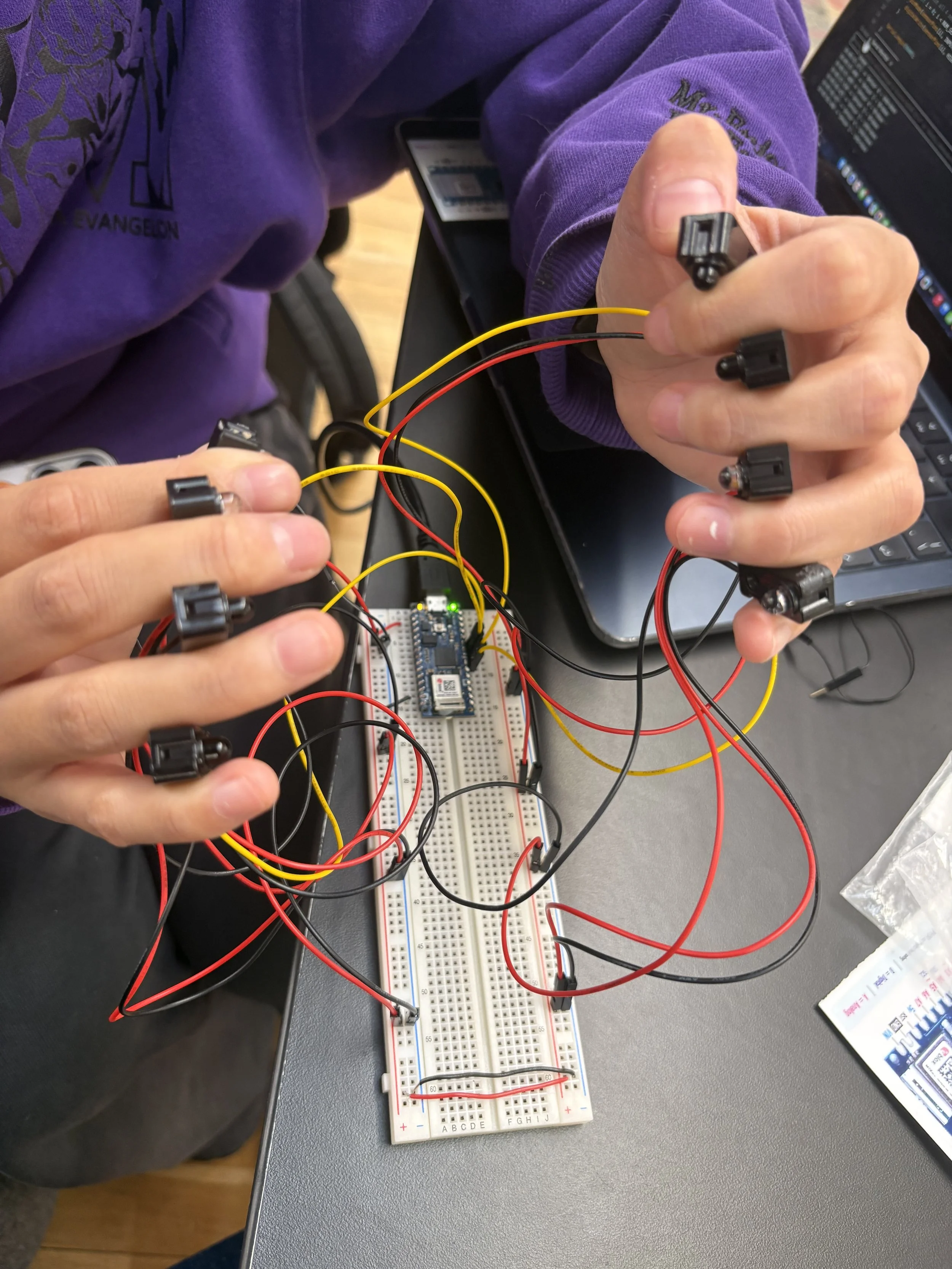
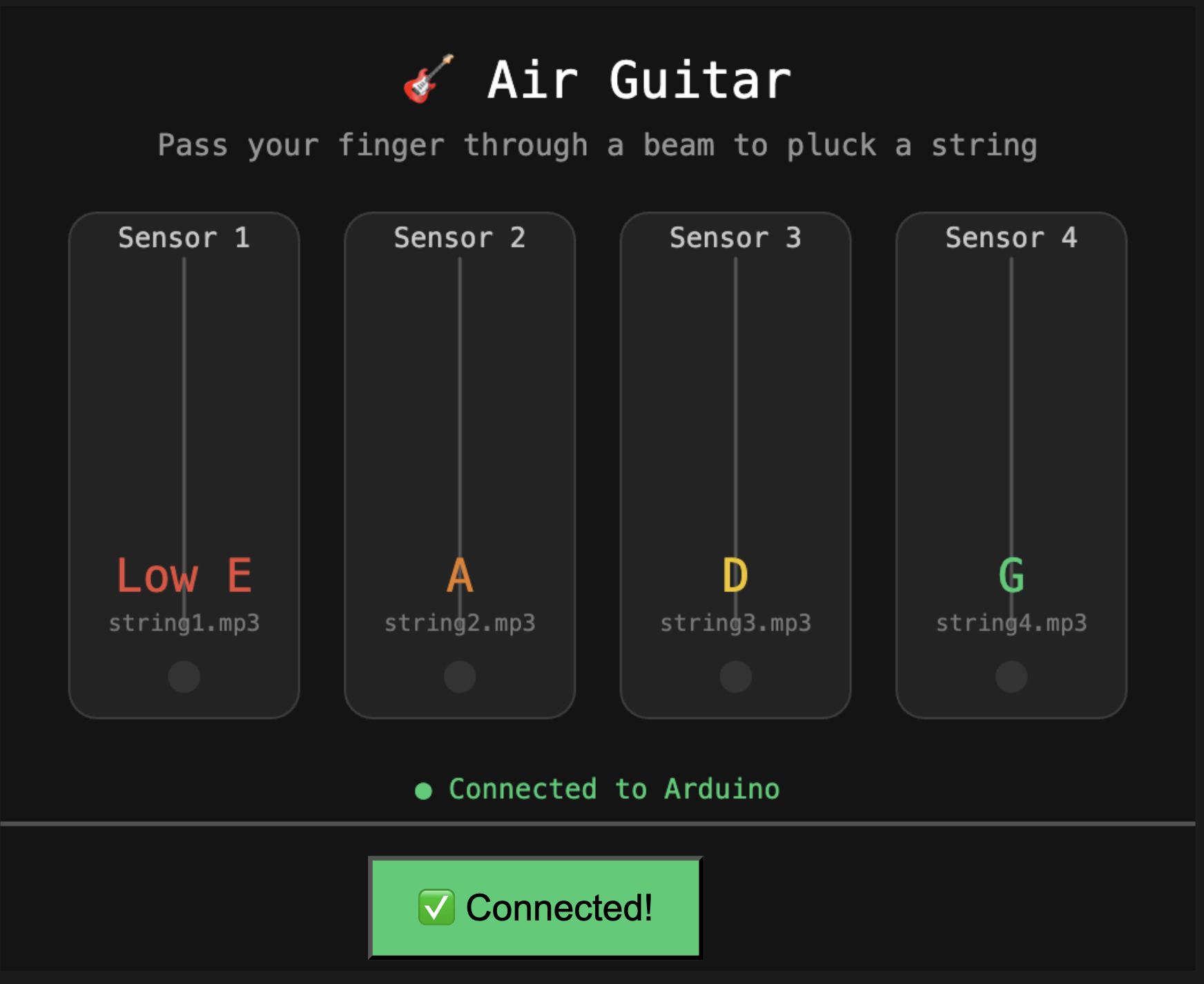
We added a total of four sets of sensors and implemented the code, which worked without issues. At this stage, we began exploring how to incorporate sound. We first considered using a speaker, but it felt too complex, so we decided to use p5.js instead. We experimented with generating sounds using Suno AI, but eventually recorded our own sounds and used them in p5.js.
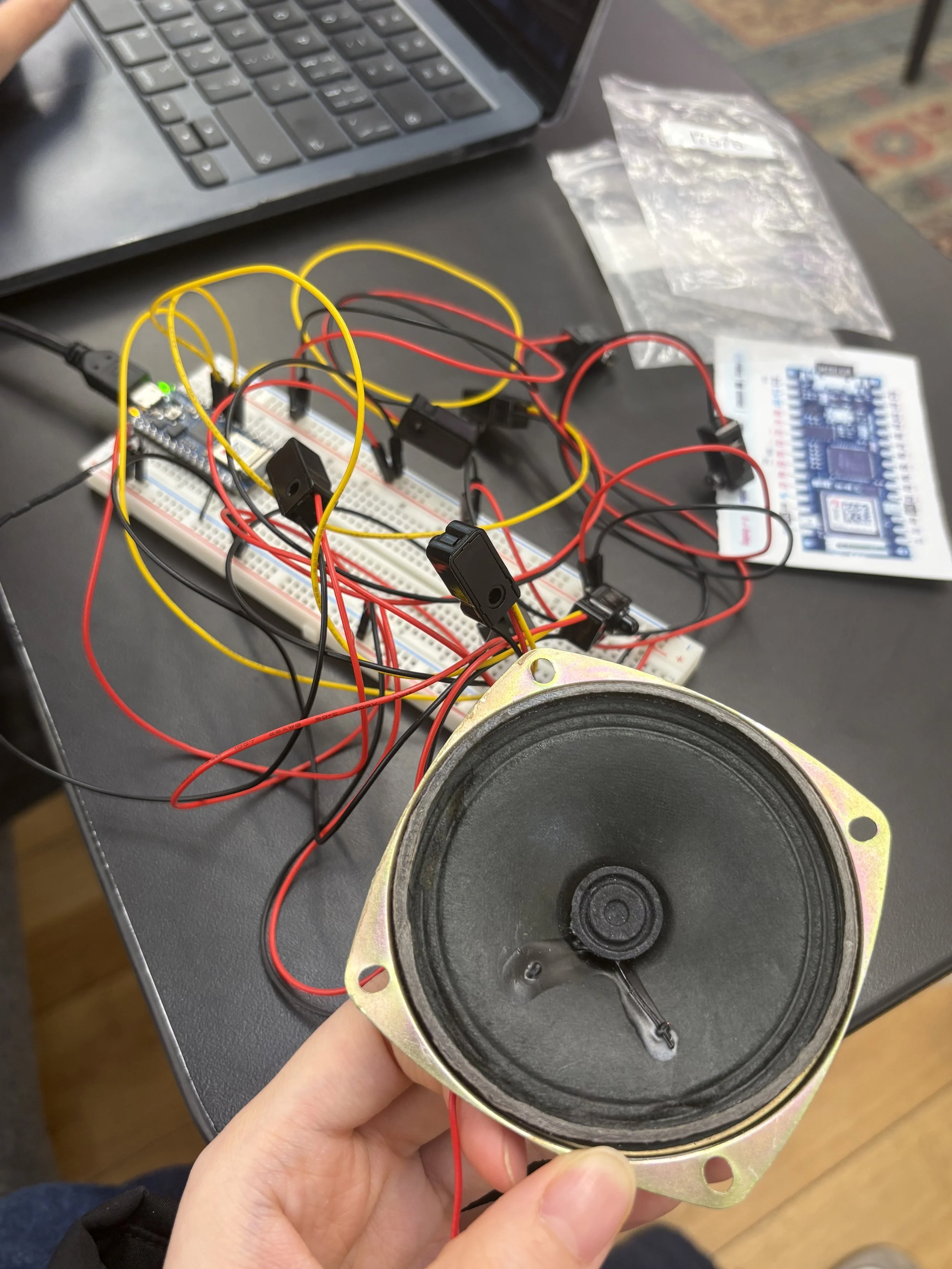
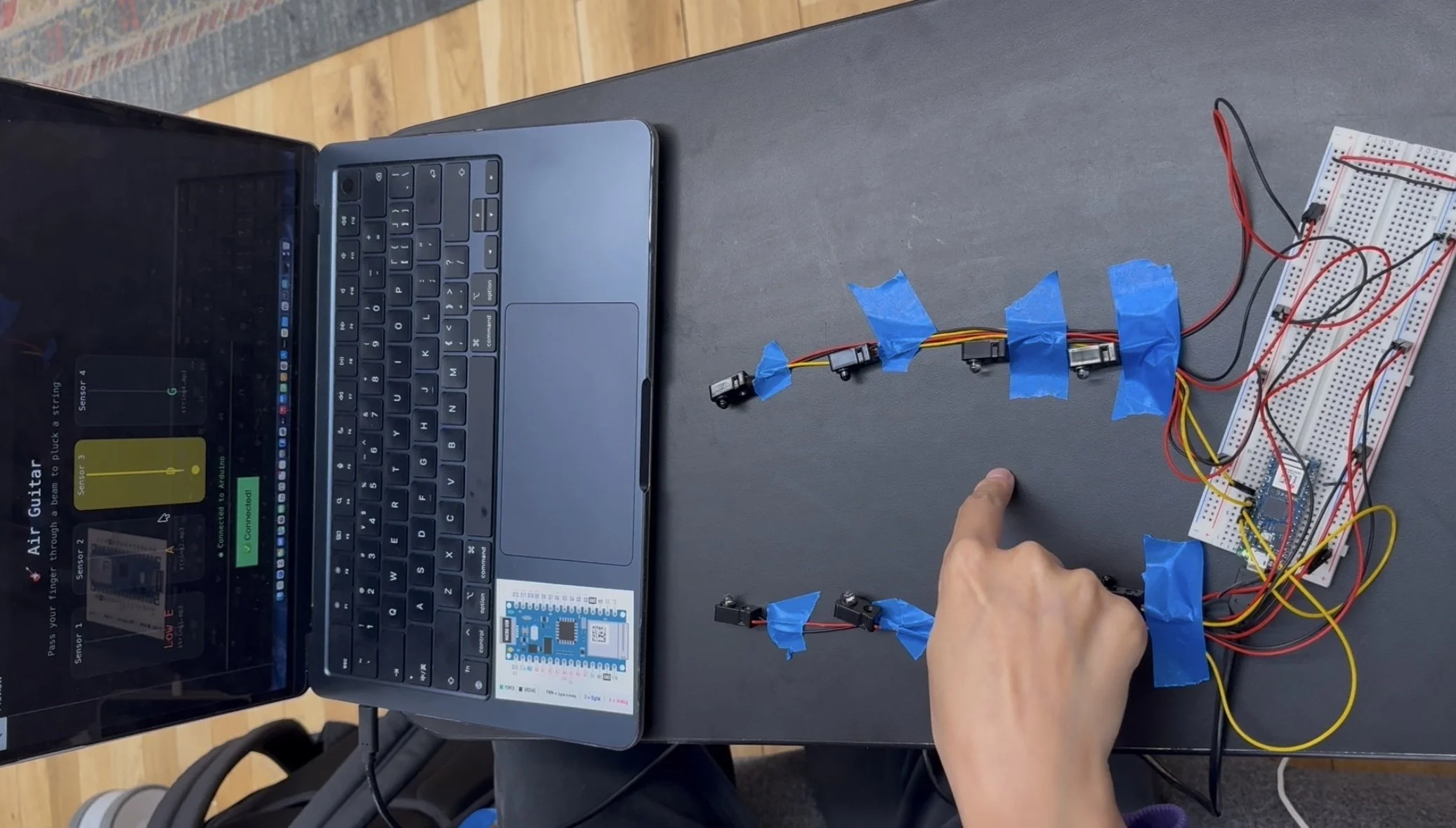
We mapped each sensor to a different sound, similar to guitar strings. When users interact with the invisible beams, each “string” produces a corresponding sound, and the interaction worked well. We also found that the sensors only function reliably within a certain distance, so we adjusted their spacing accordingly.
For future development, we think building a physical guitar structure would make the final piece more immersive and visually engaging.
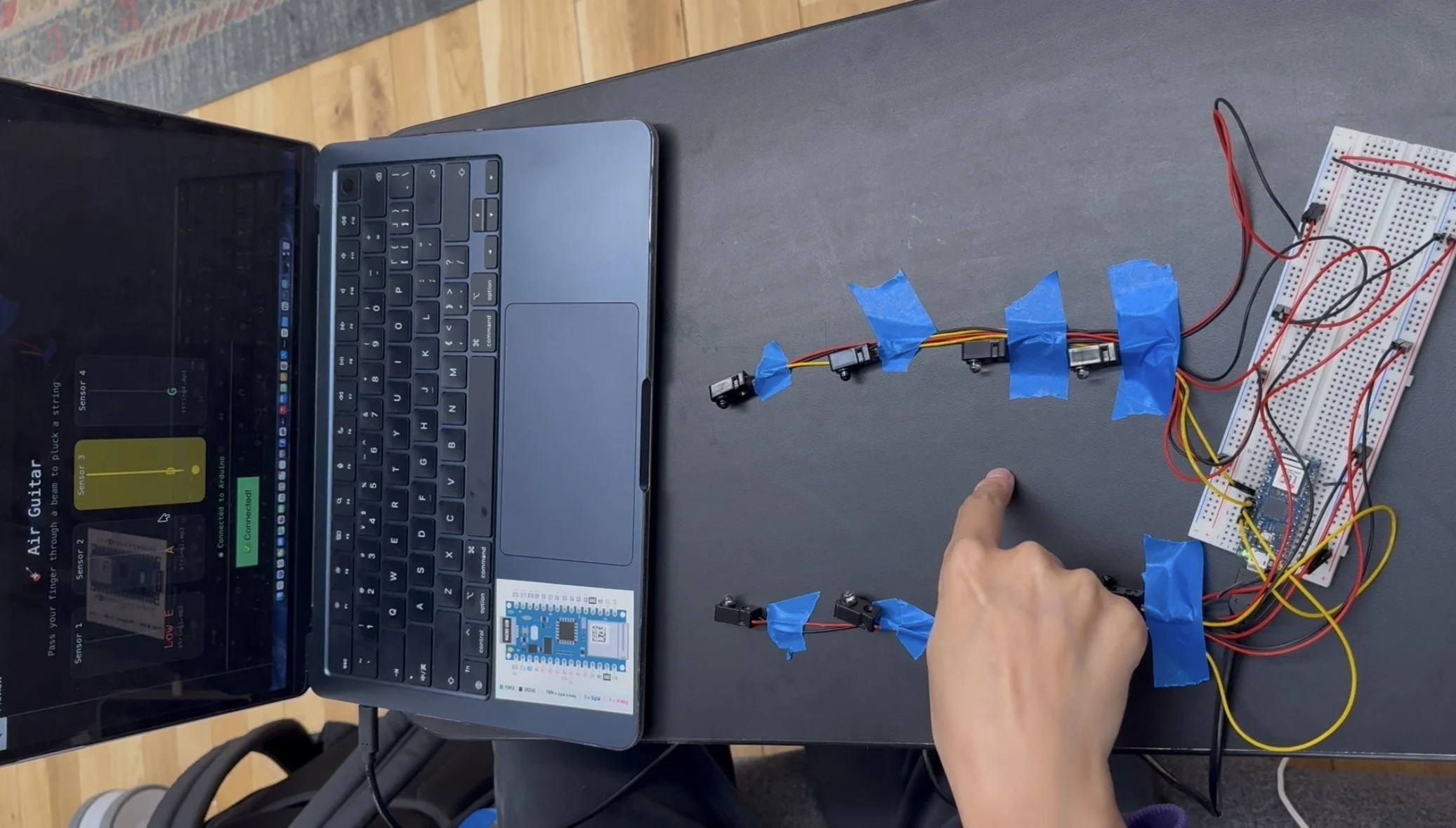
Through testing, we explored how sensitive the breakbeam sensor is to distance. We found that the sensor only works reliably when the transmitter and receiver are placed close enough together. Small variations in distance and alignment affected detection, so we adjusted the spacing to ensure more consistent interaction.